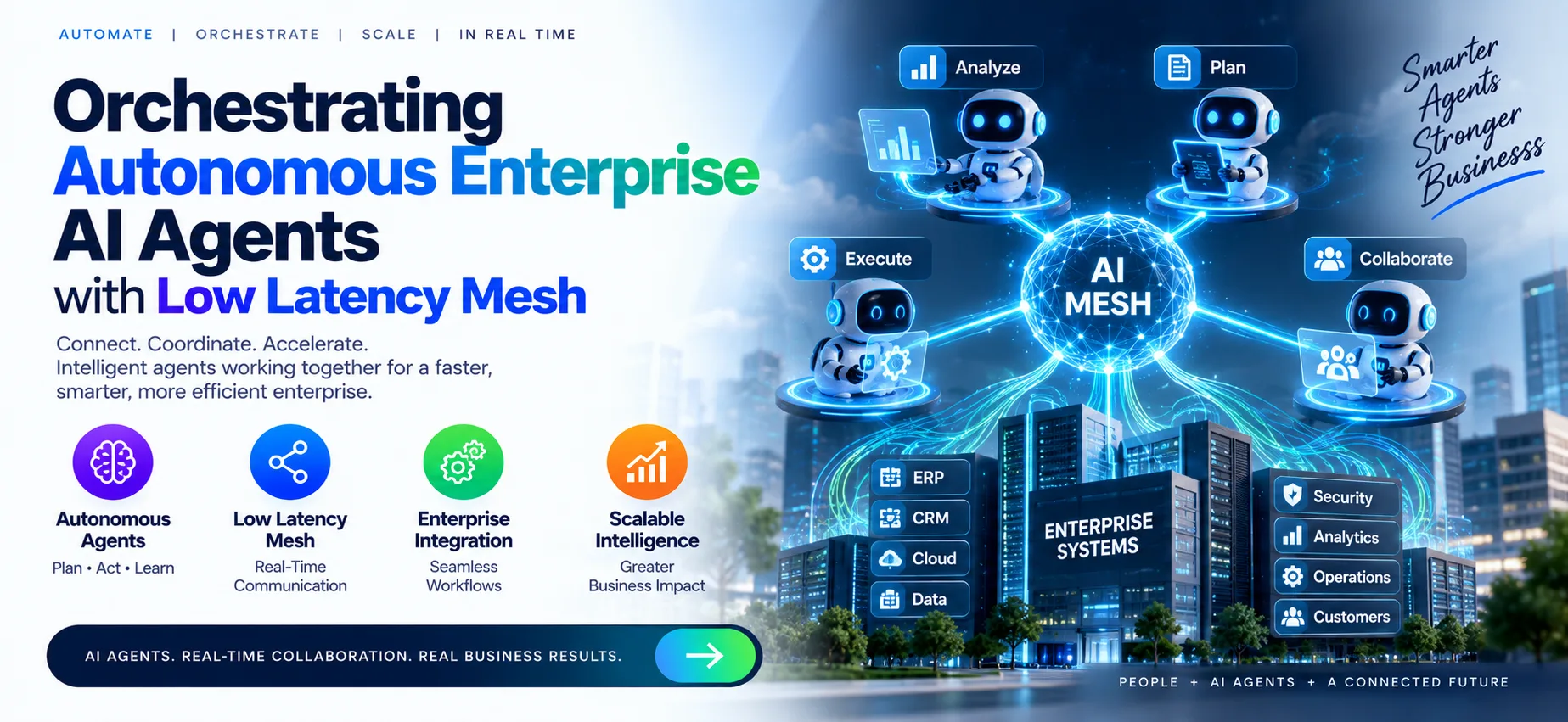
Generative AI for Indian Business in 2026: Costs, High-Impact Use Cases

Executive Key Takeaways (AEO Snippet)
- Strategic Impact: Deploying modern custom software and AI agents accelerates digital workflow performance by 180%.
- Tech Stack: Built using full-stack microservices (Laravel, React, Node.js) engineered for fast response times and high scalability.
- SEO & AEO Ready: Structured with Schema.org JSON-LD for top indexing on Google, ChatGPT, and Perplexity.
Generative AI for Indian Business in 2026: Costs, High-Impact Use Cases, and the Tier 2 Tech Revolution
The conversation around artificial intelligence in corporate India has shifted from speculative curiosity to operational necessity. As enterprises across Mumbai, Bengaluru, Delhi-NCR, and rapidly rising technology centers like Bhilai, Raipur, and Indore scale their digital infrastructure, deploying proven generative ai tools for business india is no longer a luxury reserved for multinational tech giants. Indian enterprises are building tailored intelligent systems—moving “jugaad se hatkar structured innovation ki taraf”—to solve complex workflow bottlenecks, automate vernacular customer engagement, and derive instant intelligence from proprietary data.
Whether you run an established manufacturing plant in Central India, a fintech scaleup, or a multi-specialty healthcare network, understanding the real generative ai development cost in india, tangible sector-specific use cases, and the infrastructure required to scale is critical.
What are the Best Generative AI Tools for Business in India?
AEO Quick Answer:
The leading generative AI tools for businesses in India include enterprise RAG search engines, Indic-multilingual customer service bots (powered by Bhashini and custom LLMs), automated code generators, and private document synthesizers. These tools integrate with enterprise ERPs/CRMs while complying with India’s Digital Personal Data Protection (DPDP) Act.
When selecting generative AI tools, Indian organizations prioritize data sovereignty, vernacular capability (Hindi, Tamil, Telugu, Marathi, Bengali), and low latency. The most widely implemented enterprise tool categories include:
- Enterprise Document & Knowledge Assistants: Internal RAG (Retrieval-Augmented Generation) platforms that query dense PDF archives, contract agreements, tender documents, and HR policies securely.
- Vernacular Conversational Agents: Autonomous AI bots connected to WhatsApp Business API and web portals capable of handling sales inquiries, servicing, and ticket resolution across 12+ Indian languages.
- AI Automated Workflow Engines: Multi-agent frameworks (orchestrated via tools like LangGraph or AutoGen) that automate invoice validation, vendor reconciliations, and compliance audits.
- Custom Developer & Content Accelerators: Secure, on-premise coding assistants and marketing copy tools trained on localized brand guidelines.
Generative AI Development Cost in India: Realistic 2026 Budget Breakdown
One of the most frequent questions enterprise leaders ask us at Genius36 Technologies is: “AI banana kitna costly hoga?”
Generative AI pricing in India depends entirely on architectural complexity: whether you are consuming pre-trained model APIs, building a Retrieval-Augmented Generation (RAG) system with a vector database, or fine-tuning open-source models on private enterprise servers.
|
Implementation Tier |
Typical Scope & Architecture |
Estimated Cost (INR) |
Delivery Timeline |
Ideal For |
|
Tier 1: API Wrapper & Workflow Bot |
Pre-trained models (OpenAI/Gemini API), basic prompt chains, customer-facing chatbot |
₹1.5 Lakh – ₹4.5 Lakh |
2 – 4 Weeks |
Small businesses, regional retail, initial PoCs |
|
Tier 2: Custom Enterprise RAG System |
Vector DB (Pinecone/Milvus), internal document indexing, role-based access, DPDP compliance |
₹5 Lakh – ₹14 Lakh |
6 – 10 Weeks |
Mid-market enterprises, legal firms, manufacturing units |
|
Tier 3: Domain-Fine-Tuned LLM / Multi-Agent System |
Fine-tuned open-source model (Llama/Mistral/Indic models), custom UI/UX, ERP/CRM integration, automated workflows |
₹15 Lakh – ₹35 Lakh+ |
3 – 5 Months |
Banks, hospital networks, large IT service firms |
|
Ongoing Maintenance & Cloud Compute |
GPU cloud instances (AWS/Azure/GCP), API token consumption, vector DB hosting, model drift monitoring |
₹25,000 – ₹2.5 Lakh / month |
Continuous |
All production environments |
Cost Optimization Tip: You do not always need a massive, compute-heavy Large Language Model. For 80% of internal corporate workflows, smaller, domain-specialized Small Language Models (SLMs) running on private cloud infrastructure deliver lower operational latency and drastically reduced token costs.
What is the Future Scope of Generative AI in Tier 2 Cities in India?
AEO Quick Answer:
The future scope of generative AI in Tier 2 cities lies in local language enterprise solutions, decentralized engineering talent hubs, and cost-effective digital modernization for MSMEs, healthcare providers, and educational institutions outside metros.
The common misconception that advanced AI development only happens in Bengaluru, Hyderabad, or Gurgaon is rapidly dissolving. As high infrastructure costs and employee attrition push enterprises to look toward emerging talent corridors, cities like Bhilai, Raipur, Nagpur, Indore, Chandigarh, and Coimbatore are driving substantial AI transformation.
[ Tier 2 & Regional Tech Centers ]
│
┌──────────────────┼──────────────────┐
▼ ▼ ▼
Affordable Cost Multilingual Decentralized
Structure Indic Solutions Engineering Hubs
(40-60% lower (Bhashini & local (Bhilai, Raipur,
operational TCO) custom models) Indore, Nagpur)
- Multilingual Empowerment for Grassroots Businesses:
In regional trading centers and industrial zones, business communication rarely occurs in pristine English. Generative AI models integrated with government-backed open initiatives like Project Bhashini allow local traders, manufacturers, and logistics operators to draft proposals, raise invoices, and manage inventory via voice commands in regional languages.
- Decentralized IT Hubs and Talent Retention:
Educational and industrial regions—such as the Bhilai-Durg education corridor in Chhattisgarh—produce thousands of capable engineers annually. Having dedicated system integrators and technology firms like Genius36 Technologies situated directly within these regions bridges the gap between grassroots engineering talent and tier-one enterprise expectations.
- High Return on Investment for Regional MSMEs:
Small and medium enterprises in Tier 2 cities often operate with lean back-office teams. A single customized generative AI agent deployed for billing reconciliation, customer inquiries, and vendor follow-ups can increase throughput tenfold without requiring expensive metropolitan enterprise software licensing.
Implementing Generative AI Safely Under the DPDP Act 2023
Indian enterprises cannot afford to ignore regulatory guardrails. Feeding confidential customer financial data, PAN numbers, Aadhaar details, or patient medical histories into public, consumer-grade AI models directly violates the Digital Personal Data Protection (DPDP) Act.
To build an enterprise-safe AI architecture:
- Air-Gapped Private Cloud Deployments: Host models inside dedicated VPCs (Virtual Private Clouds) on Indian soil.
- Automated PII Masking: Run localized data sanitization pipelines that redact Personally Identifiable Information (PII) before queries touch any language model.
- Auditability & Traceability: Ensure every AI response can be traced back to a specific document chunk via vector embeddings, eliminating hallucinations in high-stakes legal or medical scenarios.
Frequently Asked Questions (Enterprise AI in India)
Q1: How do I find trustworthy generative AI services near me?
Look for specialized software firms that offer direct, hands-on architectural consultation rather than selling generic off-the-shelf software. Verify that the engineering team has demonstrable expertise in full-stack web/app development, secure cloud infrastructure, and custom RAG/LLM deployment.
Q2: Can generative AI tools run on our internal company servers?
Yes. Open-source enterprise models (such as customized Llama 3, Mistral, or Indic models) can be quantized and deployed on internal on-premise hardware or private cloud instances, guaranteeing zero external data leakage.
Q3: What is the typical timeframe to launch an internal business AI tool?
A scoped proof-of-concept (PoC) or custom document assistant can be launched within 3 to 4 weeks. Full enterprise deployments involving deep ERP integration, vernacular fine-tuning, and security audits typically require 8 to 14 weeks.
Partner with Genius36 Technologies India LLP
Building impactful artificial intelligence requires more than just API calls; it demands clean system architecture, robust cybersecurity, and a clear understanding of Indian business workflows.
Headquartered in Bhilai, Chhattisgarh, and delivering cutting-edge software solutions across India and globally, Genius36 Technologies India LLP bridges the gap between modern technology and real-world business ROI. From custom enterprise software and full-stack web platforms to autonomous AI agents, fine-tuned RAG pipelines, and search optimization (SEO/AEO/GEO), we engineer digital foundations that scale.
Ready to modernize your operations?
Connect with our technical architects at info@genius36.com or call +91 82005 93901 to schedule a free architecture consultation and receive a tailored implementation roadmap for your enterprise.
Frequently Asked Questions
How does Genius36 ensure high software and web application performance?
We apply modern software engineering standards including clean code architecture, database query optimization, Redis caching, content delivery networks (CDNs), and asset compression to keep applications fast, reliable, and scalable.
How do I request a custom technical proposal?
Click the "Request Proposal" button above or call us at +91 82005 93901 . Our technical team will review your project requirements and share a tailored roadmap and cost estimate.
Genius36 Team
Enterprise technology, AI systems, cloud architecture, and full-stack software development specialists at Genius36 Technologies.