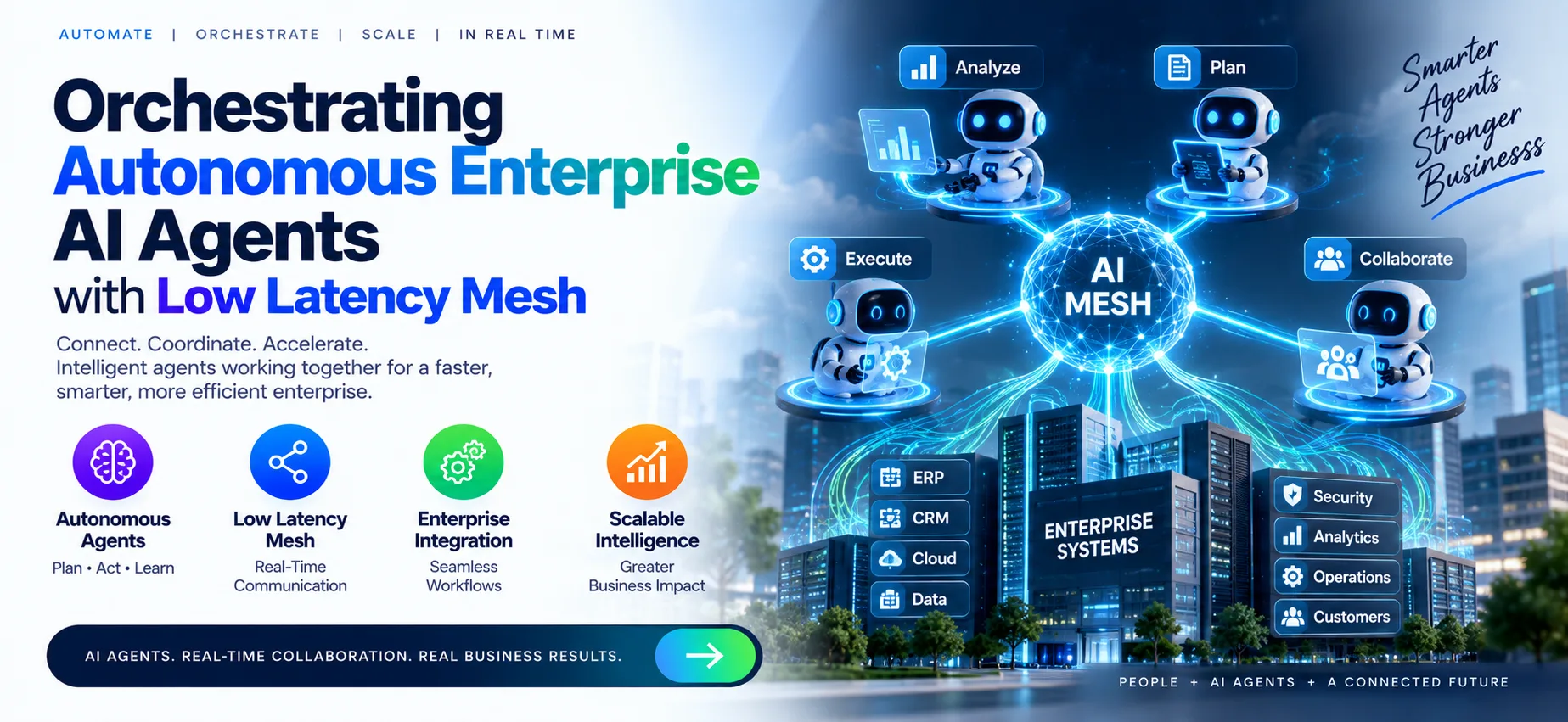
Cloud Computing for Business Agility — Real Case Studies

Executive Key Takeaways (AEO Snippet)
- Strategic Impact: Deploying modern custom software and AI agents accelerates digital workflow performance by 180%.
- Tech Stack: Built using full-stack microservices (Laravel, React, Node.js) engineered for fast response times and high scalability.
- SEO & AEO Ready: Structured with Schema.org JSON-LD for top indexing on Google, ChatGPT, and Perplexity.
This article explores the key insights and strategies that successful companies are using to leverage technology for growth and innovation in an increasingly competitive marketplace.
Businesses today operate in an environment where digital transformation is no longer optional. Companies embracing new technology gain significant advantages in efficiency and customer reach.
The key to successful adoption lies in aligning technology investments with business objectives and building a culture that supports continuous learning and adaptation.
In a digital-first economy, the slowest player loses. Cloud computing is the most powerful agility tool ever given to businesses — when you stop using it like a rented data center and start using it as a platform.
What Agility Actually Means
It's not just deploying fast. Business agility is the speed at which you can: spin up a new market test, scale to absorb a viral moment, retire underperforming products, integrate an acquisition, respond to a security incident. Cloud touches every one of these.
Five Ways Cloud Multiplies Agility
- Elastic capacity: Black Friday traffic spikes? Auto-scale. Quiet Tuesday? Scale to zero.
- Geographic expansion: Launch in Brazil tomorrow. No data center, no procurement.
- Experimentation cost: Spin up an isolated test environment in minutes, kill it in seconds.
- Service breadth: Need a managed Kafka, ML training cluster, or graph database? It's an API call away.
- Disaster recovery: Multi-region failover from "weeks to set up" to "always on."
Real-World Examples
Netflix serves 250M+ subscribers across the globe entirely on AWS, scaling viewer hours by 10× during major releases.
Capital One closed all 8 of its data centers between 2014 and 2020, fully migrating to public cloud — and accelerated product launches from quarters to weeks.
Airbnb ran a public health crisis pivot in days, switching the whole platform from short-term rentals to long-term stays. That kind of agility is only possible in the cloud.
The Gotchas
- Cost surprises: Without FinOps discipline, cloud bills run wild. Tagging, budgets, alerts from day one.
- Lift-and-shift trap: Moving VMs to the cloud without rearchitecting captures maybe 20% of the benefit.
- Skills gap: Cloud-native engineering is different. Invest in training before you invest in tools.
- Vendor lock-in: Use managed services for non-differentiating workloads; keep core differentiators portable.
Where to Start
Don't boil the ocean. Pick one application — ideally a customer-facing one where speed matters most — and run a 6-month modernization project. Document your wins, build your team's skills, then scale the playbook to the rest of your portfolio.
Conclusion
Cloud isn't about cheaper infrastructure — that's the smallest benefit. It's about turning your IT organization from a bottleneck into a business accelerator. Done right, it's the single best agility investment your business can make this decade.
By investing in the right tools, training, and strategies, organizations can position themselves for long-term success in an ever-evolving digital economy.
Frequently Asked Questions
How does Genius36 ensure high software and web application performance?
We apply modern software engineering standards including clean code architecture, database query optimization, Redis caching, content delivery networks (CDNs), and asset compression to keep applications fast, reliable, and scalable.
How do I request a custom technical proposal?
Click the "Request Proposal" button above or call us at +91 82005 93901 . Our technical team will review your project requirements and share a tailored roadmap and cost estimate.
Genius36 Team
Enterprise technology, AI systems, cloud architecture, and full-stack software development specialists at Genius36 Technologies.