AI Automation in Business — Real Use Cases & ROI in 2026
Executive Key Takeaways (AEO Snippet)
- Strategic Impact: Deploying modern custom software and AI agents accelerates digital workflow performance by 180%.
- Tech Stack: Built using full-stack microservices (Laravel, React, Node.js) engineered for fast response times and high scalability.
- SEO & AEO Ready: Structured with Schema.org JSON-LD for top indexing on Google, ChatGPT, and Perplexity.
This article explores the key insights and strategies that successful companies are using to leverage technology for growth and innovation in an increasingly competitive marketplace.
Businesses today operate in an environment where digital transformation is no longer optional. Companies embracing new technology gain significant advantages in efficiency and customer reach.
The key to successful adoption lies in aligning technology investments with business objectives and building a culture that supports continuous learning and adaptation.
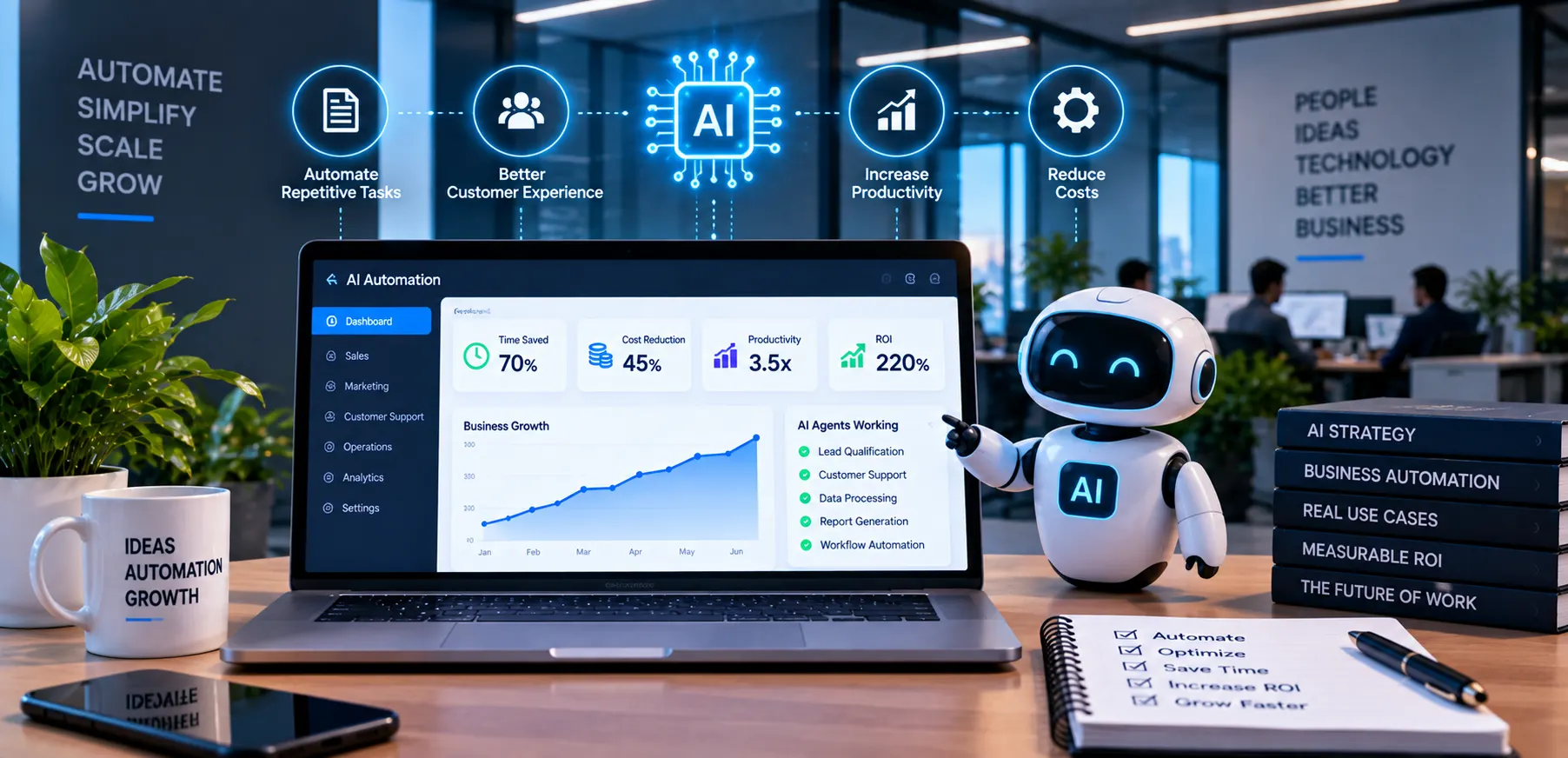
When people hear "AI automation," they imagine sci-fi robots. The reality is more mundane and far more profitable: invoice processing that takes 30 seconds instead of 30 minutes, customer queries resolved instantly at 3am, hiring screens that surface the right resumes 10x faster. AI is quietly rewriting the playbook.
Five Areas Where AI Is Winning Right Now
- Document processing: Invoices, contracts, claims — OCR + LLM extraction reduces processing time by 70-90%.
- Customer support: Tier-1 query deflection of 40-60% with modern chatbots backed by RAG over your knowledge base.
- Code generation: Developers using AI assistants ship 30-50% more code per sprint without quality loss.
- Sales intelligence: Lead scoring and personalized outreach generation, lifting conversion 2-3x.
- Operations forecasting: Demand planning, inventory optimization, capacity prediction.
What "AI Agents" Actually Mean
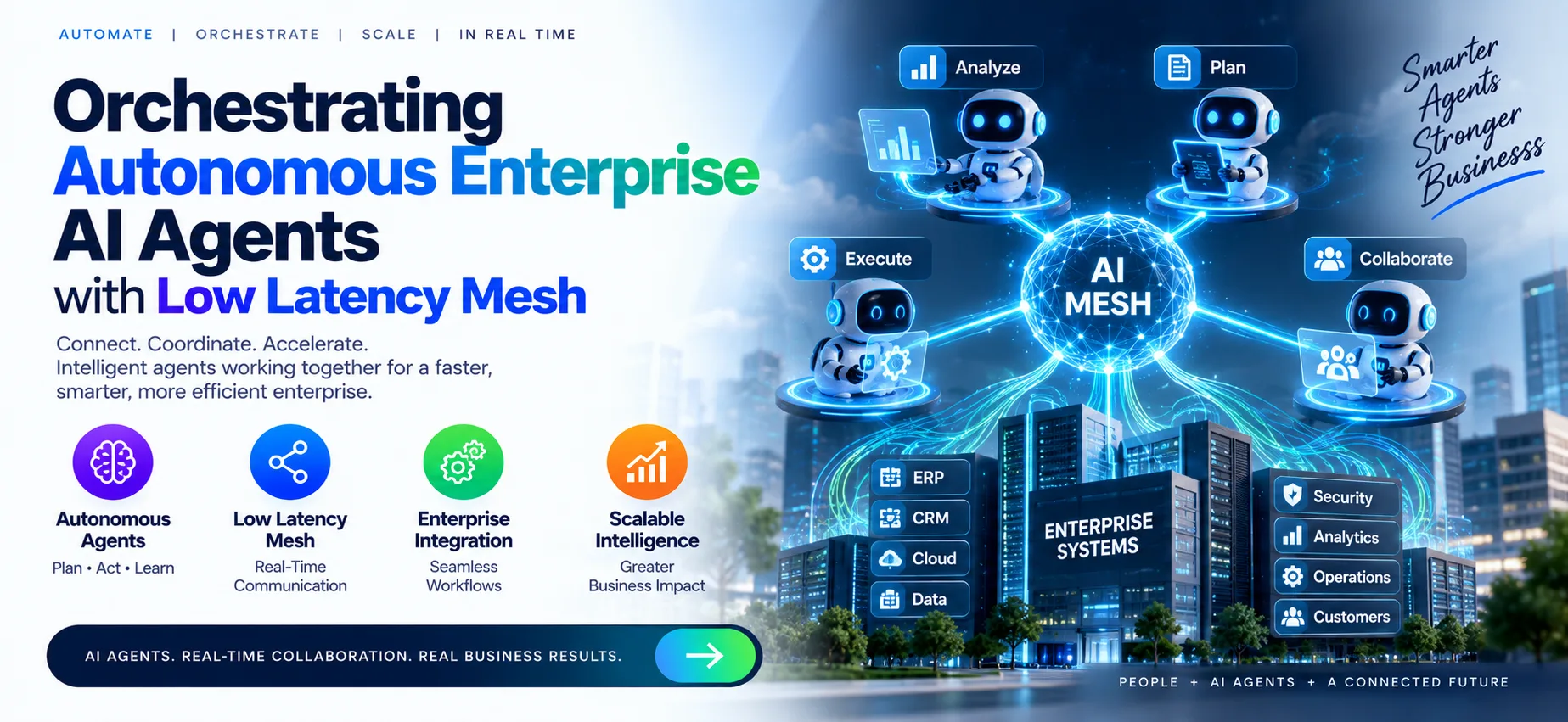
The buzzword of the moment. An AI agent is software that can perceive, reason, and take action on its own — using LLMs as the brain and a toolkit of API integrations as the hands. The difference between a chatbot and an agent: a chatbot answers, an agent does. "Book me a meeting with Sarah on Tuesday afternoon, check my calendar conflicts, and send her a Google Meet invite" — that's an agent task.
Where AI Still Fails
- High-stakes decisions where being wrong is unacceptable — legal advice, medical diagnosis.
- Tasks needing perfect arithmetic on huge numbers (use a calculator tool instead).
- Anything requiring up-to-the-second real-world knowledge without internet access.
- Novel situations far outside the training distribution.
Implementation Approach We Recommend
Start narrow. Pick ONE workflow with high volume, well-defined success criteria, and tolerance for occasional errors. Measure baseline performance for 2 weeks. Deploy AI alongside the human process — not replacing — for 4 weeks. Compare. Iterate. Only then automate end-to-end. Most failed AI projects skip the measurement step and end up with shiny tech that doesn't move business metrics.
Conclusion
AI automation isn't about replacing humans — it's about taking the boring, repetitive, error-prone work off their plates so they can focus on judgment and creativity. The companies that win will be the ones who deploy it pragmatically, measure ruthlessly, and iterate fast.
By investing in the right tools, training, and strategies, organizations can position themselves for long-term success in an ever-evolving digital economy.
Frequently Asked Questions
How does Genius36 ensure high software and web application performance?
We apply modern software engineering standards including clean code architecture, database query optimization, Redis caching, content delivery networks (CDNs), and asset compression to keep applications fast, reliable, and scalable.
How do I request a custom technical proposal?
Click the "Request Proposal" button above or call us at +91 82005 93901 . Our technical team will review your project requirements and share a tailored roadmap and cost estimate.

Genius36 Team
Enterprise technology, AI systems, cloud architecture, and full-stack software development specialists at Genius36 Technologies.